Inside Seoul’s Independent Design Stores
The quiet shops behind Euljiro that supply half of Korea’s studios.
Euljiro is not a design district in the way a city council would define one. It is a hardware district — four or five blocks east of Myeongdong where lighting, sheet metal, printing, tiles, glass and screws have been sold since the sixties, out of shophouses so narrow that stock is stacked in the street and carried back in at night. The design part is upstairs. Somewhere around 2015 the ground-floor rents stayed low and the rooms above them started filling with studios, and there is now a bar on the fourth floor of a building whose ground floor sells industrial castors. Nothing has a sign. You are expected either to know, or to be brought by someone who does. The best directions we ever got in Euljiro were a photograph of a doorway and the word “third”, sent by a designer at eleven at night, with no street name attached.
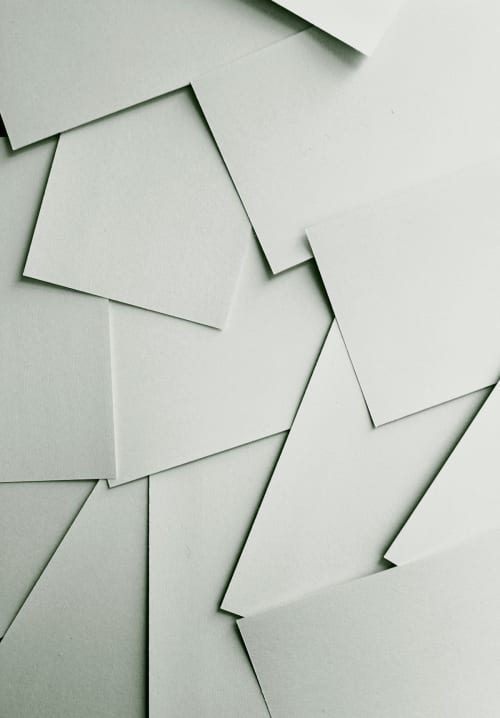
The paper merchant we use is on the second floor of a building on Eulji-ro 33-gil, up a staircase with a bare bulb and a smell of dust and glue. There is no shop front, just a room with racks to the ceiling and a man in his seventies who cuts to size on a guillotine older than he is. He carries about two hundred stocks and can name the mill for every one of them. We asked for something for the letter sets. He asked what it was for, listened to the whole answer, then pulled down three sheets and told us the first two were wrong before we had touched them. That is the transaction here. You do not browse; you describe the problem. We came back the next day with a measurement written down incorrectly and he corrected it from memory. He works alone, has no card, and takes payment in cash or by bank transfer to an account number written on the back of an offcut. There is a fax machine on the desk and it is plugged in.
Sewoon Sangga is the long concrete spine running through the middle of all this — a 1968 megastructure that was condemned, half demolished, reprieved, and is now half studios and half the same electronics stalls it always had. The aluminium trays we sell are anodised in a shop on its western side. Anodising is a conversion, not a coating: the surface of the metal is chemically turned into oxide rather than covered over, which is why the tray takes a scratch and shows almost nothing. The man who does it works to aerospace tolerances for his main clients and treats a run of two hundred trays as a favour to a friend of a friend. He charges accordingly. We pay it, because there is nowhere within four hours of Seoul that will do six units in that particular grey. The anodising bath is about four metres long and the colour is controlled by dye time, measured with a kitchen timer that he replaces roughly once a year. We have seen him reject a tray for a shade difference we could not see across the room.
Hanji is the other thing worth crossing the city for. It is made from the inner bark of the paper mulberry — cooked, beaten and sheeted by hand — and the good material no longer comes from Seoul at all. The mills are in Jeonju and Andong; Seoul is where it is sold. It behaves nothing like Western paper. It is fibrous, faintly translucent, absurdly strong along the grain, and it takes ink in a way that makes a fountain pen feel suddenly overqualified. It is also expensive, and the shops will cheerfully sell you machine-made mulberry-look paper at a fifth of the price. The test is to tear a corner. Hanji tears with a long hairy fibre. The imitation tears clean. Prices run from about 3,000 won a sheet for the plain stuff to 40,000 for dyed sheets coloured with gardenia and mugwort, which fade — deliberately, over years — into something quieter than they started.
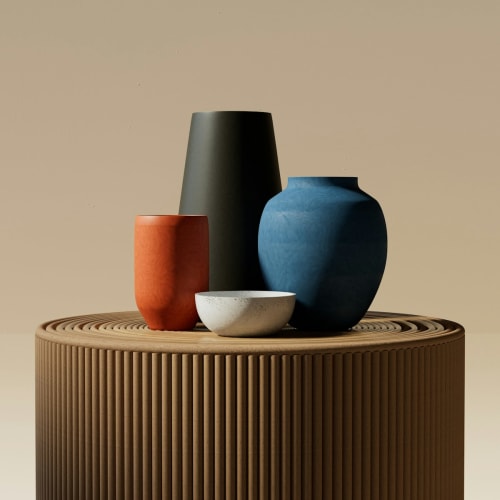
The shops proper — the ones with names and opening hours — are mostly across the river or out in Seongsu, in converted shoe factories. They are small, expensively lit, and they sell about forty things each. What is striking is how little of it is Korean-traditional and how much of it is simply Korean: a stainless dish with a rolled rim at 38,000 won that would survive a house fire; a lamp made of three parts. There is a suspicion of ornament here that reminds us of Japan, but it is warmer and far more willing to be funny. The Japanese object apologises for existing. The Korean one does not. Both are on the same shelf in our flat and we can tell them apart from the doorway. The one habit we have taken from these shops is the tray by the till holding the thing the owner made first, badly, some years ago, kept out on purpose where customers can see it.
None of this is arranged for visitors, and it is worth saying that plainly. There are no English signs in Euljiro, the good floors are unmarked, and half the people we buy from would rather we did not send anyone else. We got in the way we always do: by asking a designer in Hongdae where she had her prototypes made, then asking the man who made them who supplied his sheet, then going to see him. It took two trips and a lot of standing about being politely tolerated. If you go, go on a weekday morning, take a notebook rather than a camera, and buy something small from everybody who lets you in. Take cash. Take a phone with a translation app and expect it to be useless on anything technical. And do not photograph a workshop before you have bought something from it, which is a rule we were taught firmly, once, and have not needed twice.