Why Portuguese Ceramics Look Different
It is the clay, the heat, and a refusal to stop painting by hand.
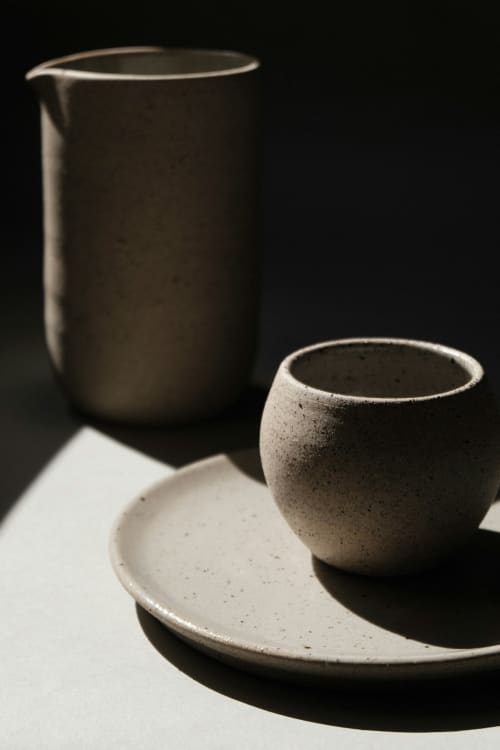
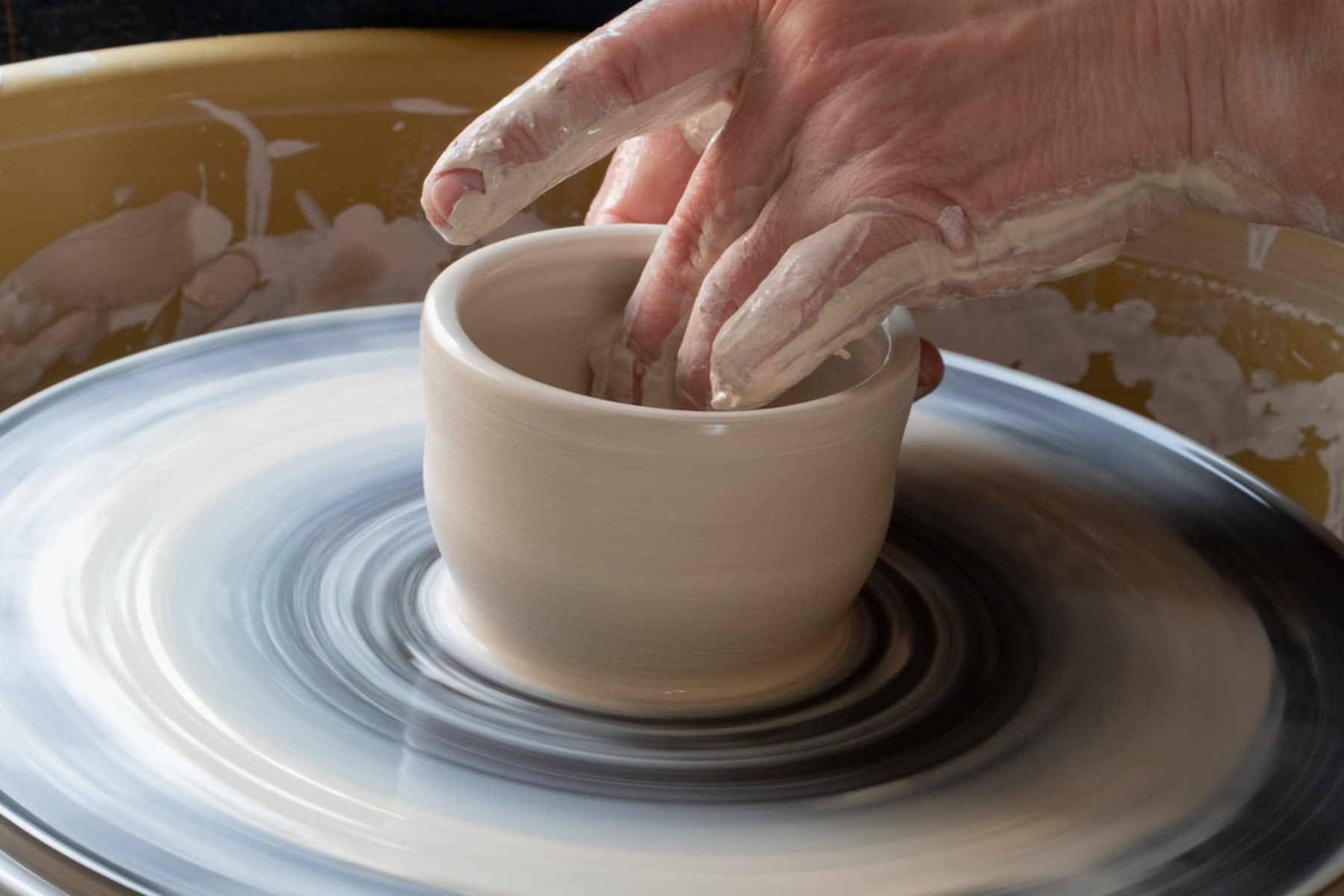
Put a Portuguese plate next to a Japanese one and a Dutch one and you can pick the Portuguese one out from across a room without knowing why. It is not the pattern. It is that the white is not white. Portuguese faience sits at a warm off-cream, the glaze pools very slightly at the rim, and the painted line has a beginning and an end — it thickens where the brush landed and runs thin where it lifted. Every one of those is the consequence of a decision taken a long time ago and never revised. We spent most of a week in Porto trying to get somebody to explain it and were mostly told that this is simply how it is done, which is true and completely unhelpful. The most useful answer we got was from a kiln man in Gaia who said the white is warm because the clay underneath is not white either, and that anyone who wants a cold white should buy porcelain and stop bothering him.
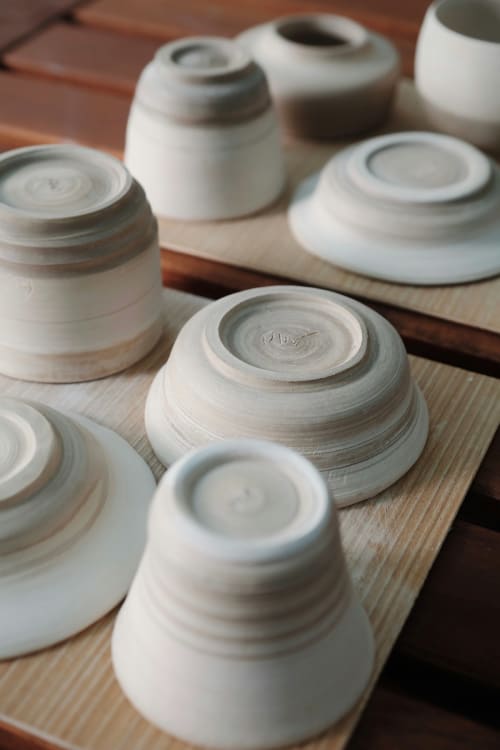
Start with the ground. The clays around Aveiro and Caldas da Rainha are calcareous — high in calcium carbonate — and they fire at a lower temperature than the stoneware bodies used in northern Europe and Japan. Roughly 950 to 1,050 degrees for the biscuit firing, rather than 1,250. A low-fired body stays slightly porous and soft, which is why a Portuguese plate chips if you are careless, and why the chip is white the whole way through instead of grey. It also barely shrinks, which is why the shapes can be broad and flat without warping in the kiln. The entire look is downstream of a geological accident and a fuel bill. It is also why the glaze crazes over the years into a fine net of lines. Portuguese customers regard that as the plate settling in. Ours occasionally regard it as a fault, which is a conversation we now have in advance.
Over that goes a tin-opacified glaze, which is the actual answer to the question. Tin oxide in a lead-alkaline glaze turns it opaque and creamy. It came to the peninsula with the Moors, was refined in Spain, and arrived properly in Portugal in the sixteenth century by way of Italian maiolica and then Antwerp. The important property is that the raw glaze is powdery and absorbent before firing. You paint straight onto it, as if onto chalk, and there is no correcting: the pigment sinks in on contact. Everything about the Portuguese brushstroke — the confidence, the single unhesitating line, the tolerance for a slight wobble — comes from the fact that the painter gets exactly one attempt. Modern workshops have swapped the lead for a frit, which is safer and slightly less forgiving, and the older painters will tell you the line does not sit quite the same way. We cannot see the difference. They can.
In the workshop the sardine plates come from, half an hour outside Porto, four people paint. Three have done it for more than twenty years; one is twenty-six and has been there four. They sit at a bench by a window because north light matters, they hold the plate in the left hand and turn it rather than moving the brush, and a plate takes between four and eleven minutes depending on the pattern. Nobody uses a stencil. There is a printed reference sheet pinned above the bench and nobody looks at it. We asked the youngest how long it took to get good and she said about two years to get quick, and that she is not yet good. She was being modest. Hers are the plates we choose. Cobalt goes on first because it fires hottest; the yellows and greens go on last and sit slightly proud, which you can feel with a thumbnail on any piece worth owning.
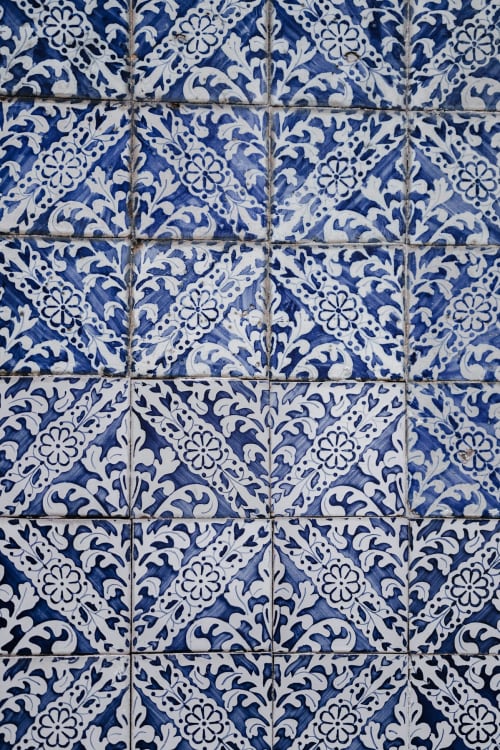
The tiles are a separate story that ended up in the same building. Azulejo comes from the Arabic az-zulayj, a polished stone, and the early Portuguese ones are geometric because figurative work was not permitted in the tradition they were copied from. Then in the seventeenth century the Dutch arrived with blue-on-white and cheap production, Portugal lost its own market, and the response was to go enormous: narrative panels, entire church walls, thousands of tiles telling one story. After the 1755 earthquake the tile went onto the outside of buildings, which almost nowhere else in Europe does — because it is waterproof, because it can be replaced one piece at a time, and because it never needs repainting. Lisbon is tiled for the same reason it is yellow. Maintenance. There are around fifty thousand square metres of exterior tile still in place in central Lisbon, and a municipal register of the panels, because people were prising them off façades and selling them at the Feira da Ladra faster than the city could replace them.
Almost all of it is industrial now and that is not a scandal. Vista Alegre has made porcelain at Ílhavo since 1824 and does it superbly, with machines. Bordallo Pinheiro’s cabbage ware has been in production since 1884 and the moulds do the work. The transfer-printed plates in every shop on Rua Augusta cost six euros and are perfectly decent objects. The difference only becomes visible when you look at forty of them side by side: they are identical, and hand-painted ones are not. A workshop of four people makes perhaps three hundred plates a week. A factory makes that before lunch. Both should exist. Only one of them is going to disappear. The workshop we buy from has four painters, one kiln, and no website. We found it because a shop in Porto that had sold out told us where their stock came from, which almost never happens and which we have not repaid by naming them here.
How to tell, if you are standing in a shop and cannot ask: find the same motif on two pieces. A transfer print repeats exactly, including any flaw. Hand painting does not — the fish will have a different eye. Look at the reverse for the small stilt marks where the piece stood in the kiln. Look at the edge of the blue where it meets the white; a printed edge is sharp at every point, a brushed one is sharp where the brush was travelling and soft where it stopped. Then weigh it. Low-fired faience is heavier than it looks and gives a dull note when you tap the rim, not a ring. A ring means porcelain, which means somewhere else. If you can ask, ask who painted it. In a real workshop somebody will know the answer, and they will usually go and get her.