What We Brought Home From Lisbon
Nine objects, one suitcase, and a long argument about a tile.
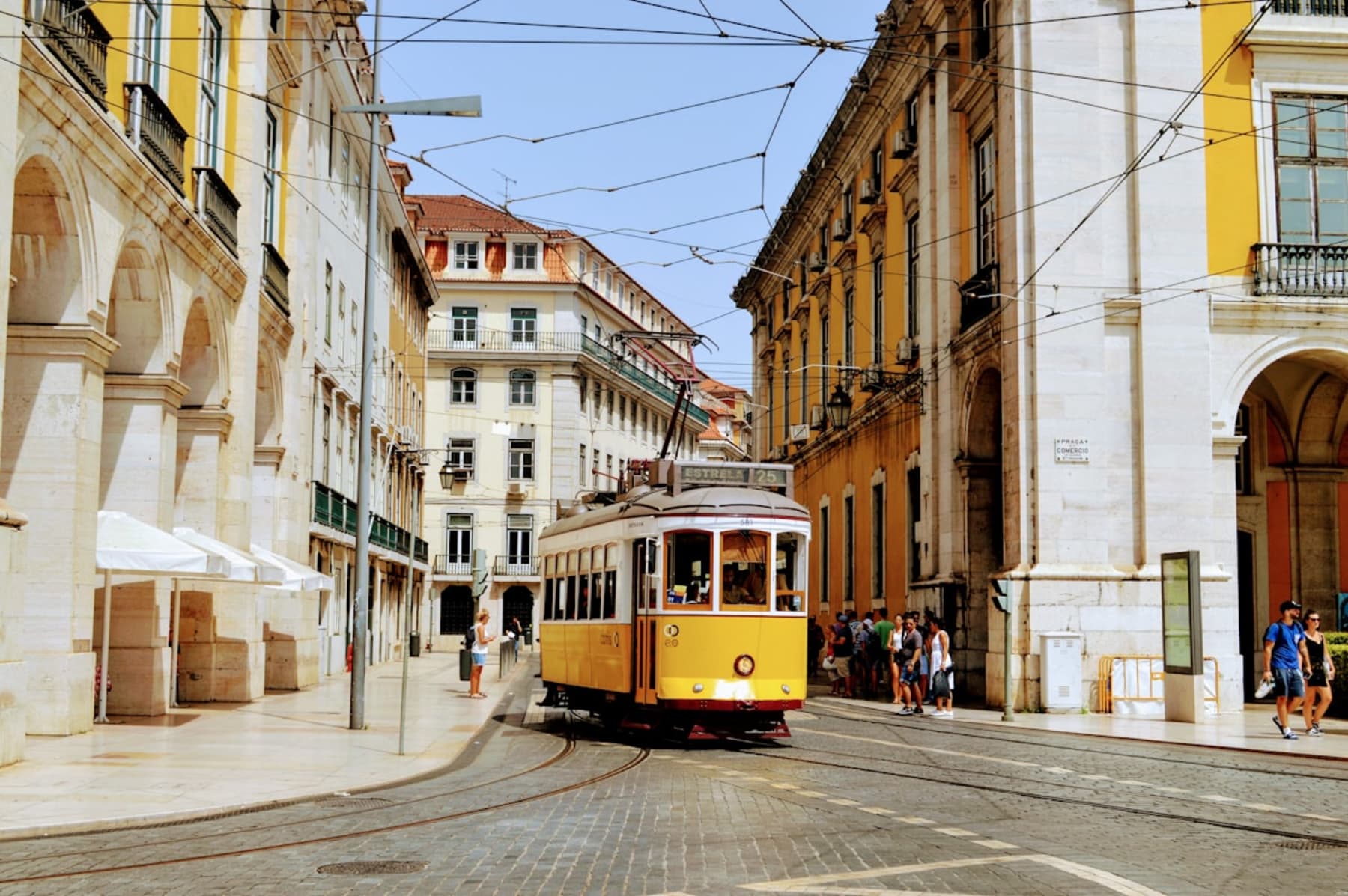
We flew into Lisbon on a Tuesday with one empty suitcase between us and a list of four things, which is roughly how every trip starts and never how it ends. The apartment we rented was in Graça, up a hill steep enough that the tram driver rang his bell at us on the way past, and it had the two features we actually need: a table big enough to lay objects out on, and a bathroom scale. Everything we buy gets weighed. Excess baggage from Lisbon to Delhi runs to about twelve euros a kilo, which sounds trivial until you are standing in a stairwell at midnight holding nine kilos of glazed terracotta and doing sums on a phone. The list, for the record, read: espresso cups, sardine plates, cork, one tile. By the Friday it ran to two pages and a rough sketch of how the wardrobe would have to be repacked to get any of it home.
The first morning we went to the Feira da Ladra, the flea market at Campo de Santa Clara, which runs on Tuesdays and Saturdays and is at its best before nine. Most of it is other people’s cutlery. But at the far end, past the men selling single shoes, there is a row of dealers who work in ceramics from closed factories — plates from the Sacavém works, tiles pulled off buildings demolished in the seventies. We bought nothing at all. We came back on the Saturday and bought a great deal, which is the more usual pattern. The first visit is for finding out what things cost and who is lying about them. The tiles were forty euros each on the Tuesday and twenty-eight on the Saturday, from the same man, which tells you something about Tuesdays. We have stopped taking it personally.
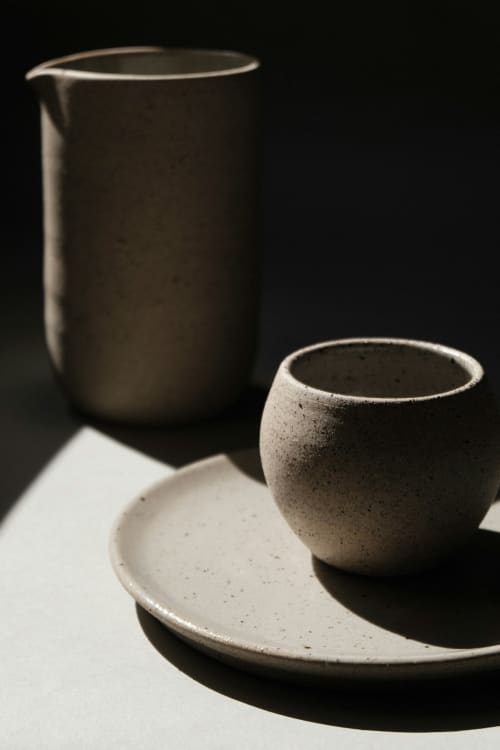
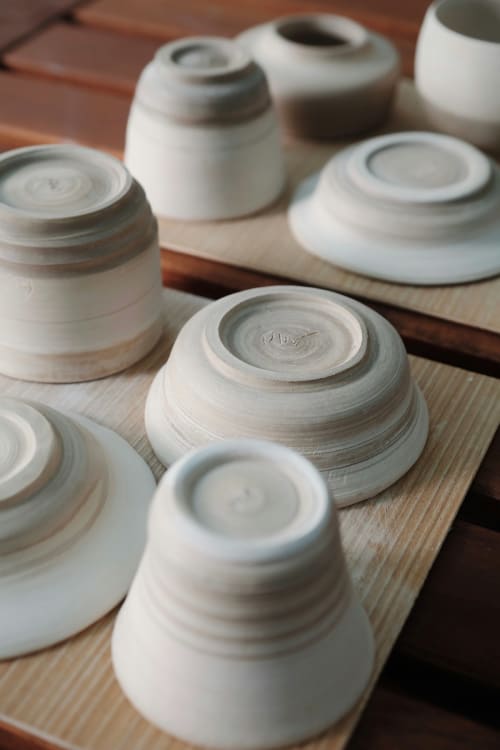
The espresso cups came from a workshop in Alcântara, under the bridge, where the traffic overhead is loud enough that the woman who runs it has stopped hearing it. She throws in the morning and glazes after lunch. The cups are small — sixty millilitres, the size a Portuguese bica actually is rather than the size an Italian one has become — with a foot slightly too heavy for the body. We asked about that. She said a cup that tips over is a cup you only own once. There were fourteen in the batch. We took twelve and left two, because she wanted to keep a pair, which we have learned to accept without arguing. She fires at 1,040 degrees in an electric kiln bought secondhand from a school in Setúbal, and the batch before ours had come out with a run in the glaze down one side, which she showed us without being asked and then set aside for her own kitchen.
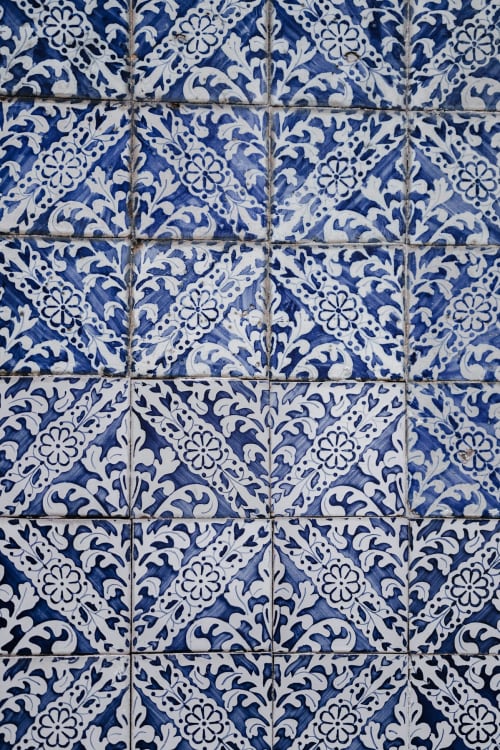
The argument was about a tile. A single azulejo, blue on white, about eighteen centimetres square, chipped along one edge and almost certainly pulled off a building rather than saved from one. The seller was entirely straightforward about this. One of us thought that made it unbuyable; the other thought the building was gone either way and the tile was not going to un-demolish it. We walked down to the river and back twice. In the end we bought it, and we wrote the provenance on the passport card exactly as it was told to us, including the part we are not comfortable with. It sits on a shelf in Delhi and it still starts the same argument about twice a year. The chip is on the lower left corner, about the size of a thumbnail, and it is the only reason we could afford it at all.
We took the train to Porto for two days, mostly for the sardine plates, and came back with cork we had not planned on. There is a cooperative near Santa Maria da Feira that presses coasters out of the waste from wine-stopper production. The discs punched from the bark are the product; what is left is a sheet full of holes that most people burn. They laminate and cut it. Every coaster has a different pattern of voids where the stoppers came out, which means no two match, which means we could not sell them as a matched set of four and had to sit with that for a while before deciding it did not matter. They cost one euro ninety each. The man who runs the press has worked out that his waste sheet is now worth more per kilo than the stoppers punched out of it, which he finds funny and slightly insulting.
Two things went wrong. The first: we bought a large faience serving dish in Vila Nova de Gaia, wrapped it badly, and heard it go in the taxi to the airport — one dull noise through three layers of newspaper that you recognise instantly and hope you have imagined. The second: we had underestimated Portuguese August. Half the workshops we had written to were shut for the entire month, including the two we most wanted to see, and the note on the door said simply férias. We have since learned to travel in May or October, and to telephone rather than email, because nobody answers email in Portugal in August and quite reasonably so. The dish had cost seventy euros. We keep the largest fragment in a drawer, which is either sentimental or a filing system, depending on which of us you ask.
Nine objects came home: twelve cups counted as one, four sardine plates, the coasters, the tile, and a small jug we have never listed because it lives in our kitchen. The suitcase weighed 21.4 kilos and we paid the excess without complaint. What we did not bring back is anything from the shops on Rua Augusta, which sell the same cork bags and the same rooster from the same three importers. Those objects are not bad, exactly. They are just not from anywhere, and that is the only test we have: somebody has to have made a decision about it, and you have to be able to find out who. On this trip, for eight of the nine, we could. The ninth was a set of six small terracotta pots from a garden centre in Almada, bought because the shape had not changed from the one beside it, which was forty years older and otherwise identical.