A Morning at Istanbul’s Grand Bazaar
Arrive at eight, before the shutters open, and it is a workshop rather than a market.
The Grand Bazaar has sixty-one streets and something like four thousand shops, and by eleven in the morning it is one of the least pleasant places in Istanbul. At eight it is a different building entirely. We came in through the Nuruosmaniye gate, which opens before the shops do, and for the first hour the main axis of Kalpakçılar belongs to handcarts: bolts of cloth, crates of glass, trays of tea moving in every direction at a speed suggesting you should get out of the way rather than apologise. Half the shutters are still down. Behind the ones that are up, men are doing paperwork, not selling. Nobody says a word to you, which after a week in Istanbul feels like an act of kindness. There is a tea seller who starts at ten past seven and runs a circuit of about forty shops carrying twelve glasses on a swinging tray, and if you stand still in the wrong place you will be walked into, politely, at speed.
The work happens in the hans — the caravanserai courtyards the bazaar grew around and then swallowed. Zincirli Han is the one most people find; there are a dozen others, and the doors to them look like doors to nothing at all. Inside: a two-storey arcade around a square of broken paving, a tree, a tap, and workshops on both levels. A jeweller. A man who does nothing but polish. A woman sorting stones into paper envelopes. A cat. The ground-floor rooms are about three metres square, the rents are famously impossible and the leases famously inherited. None of it is picturesque until the sun comes over the roofline at about half past eight, and then it very much is. Ask at the tap. The men filling kettles there will tell you which floor to go to, and it is never the floor the shop downstairs recommended.
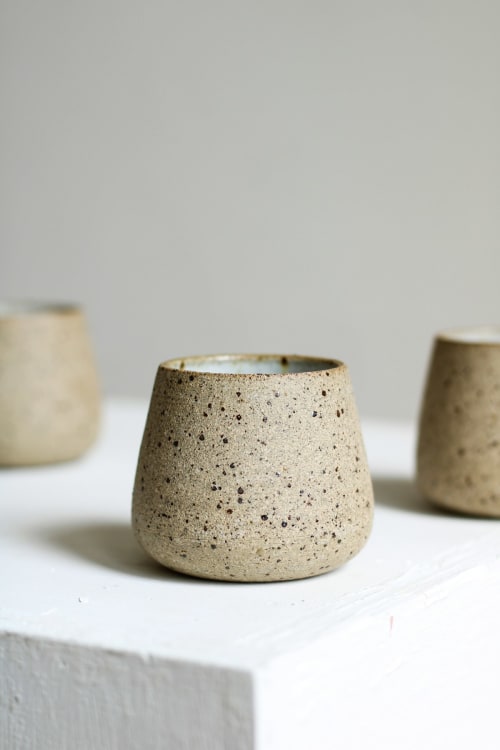
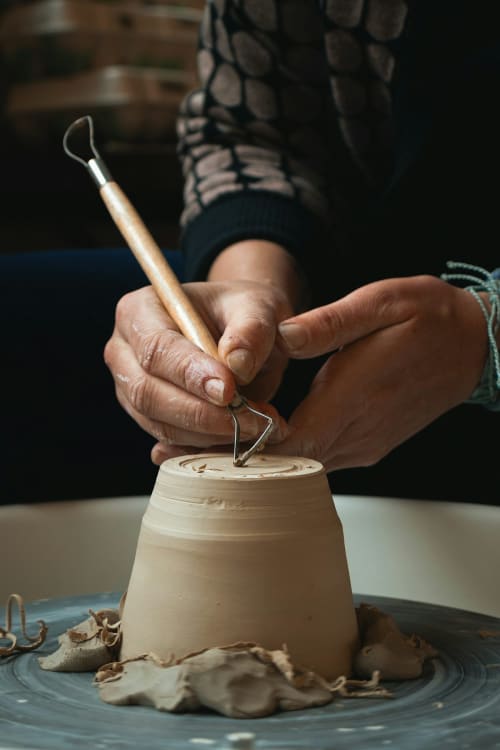
We buy copper from the upper floor of one of these. The cezve — the long-handled pot for Turkish coffee — is raised from a flat disc with a hammer, which takes about forty minutes, and then tinned on the inside. Tinning is the part nobody photographs. The pot is heated, rubbed with sal ammoniac, and molten tin is wiped around the interior with a wad of cotton by a man whose hand goes into the pot while it is hot enough to melt metal. He does it in nine seconds. The tin is what makes copper safe to cook in; it wears away with use, and every Turkish household knows to have it redone every few years. We put that on the passport card, because Indian customers, quite reasonably, do not. A retinned pot smells faintly of ammonia for a day and then does not. Ours came wrapped in a sheet of newspaper from 2019 and a rubber band cut from an inner tube.
The price conversation is not the sport that guidebooks make it. In the tourist streets it is theatre and you are the audience. In the hans it is a genuine exchange of information: the first number tells you what the copper weighs, the second tells you what he makes of your seriousness, and the third — arrived at over tea, in roughly four minutes — is close to what the thing is worth. We have never had a good outcome from being clever. We have had several from asking how long something took and then listening to the entire answer. On this trip the cezve came out at 1,100 lira and we did not haggle at all, because he had already told us it was two hours of work. The exchange rate moves enough that a price quoted on Monday is a different price on Thursday, and everybody in the bazaar knows the day’s figure before you do.
What to avoid is easier to write down. Anything gold-coloured and light is brass plate over zinc. Anything described as Ottoman antique in a shop with a card machine and English signage is a reproduction from Kahramanmaraş — which is fine, and worth about a tenth of the asking price, which is not. The lamps are nearly all assembled in one industrial estate the other side of the Golden Horn from imported glass. And the evil-eye pendants, which are genuinely Turkish and genuinely old as a form, now come out of a factory near İzmir by the tonne. None of this is dishonest, exactly. It is simply not the thing you believe you are buying, and nobody is going to correct you. The one genuinely good thing in the tourist streets is the towels — pestemal, flat-woven, from mills near Denizli — which are exactly what they claim to be and cost about what they should. We have never found a reason to distrust a towel.
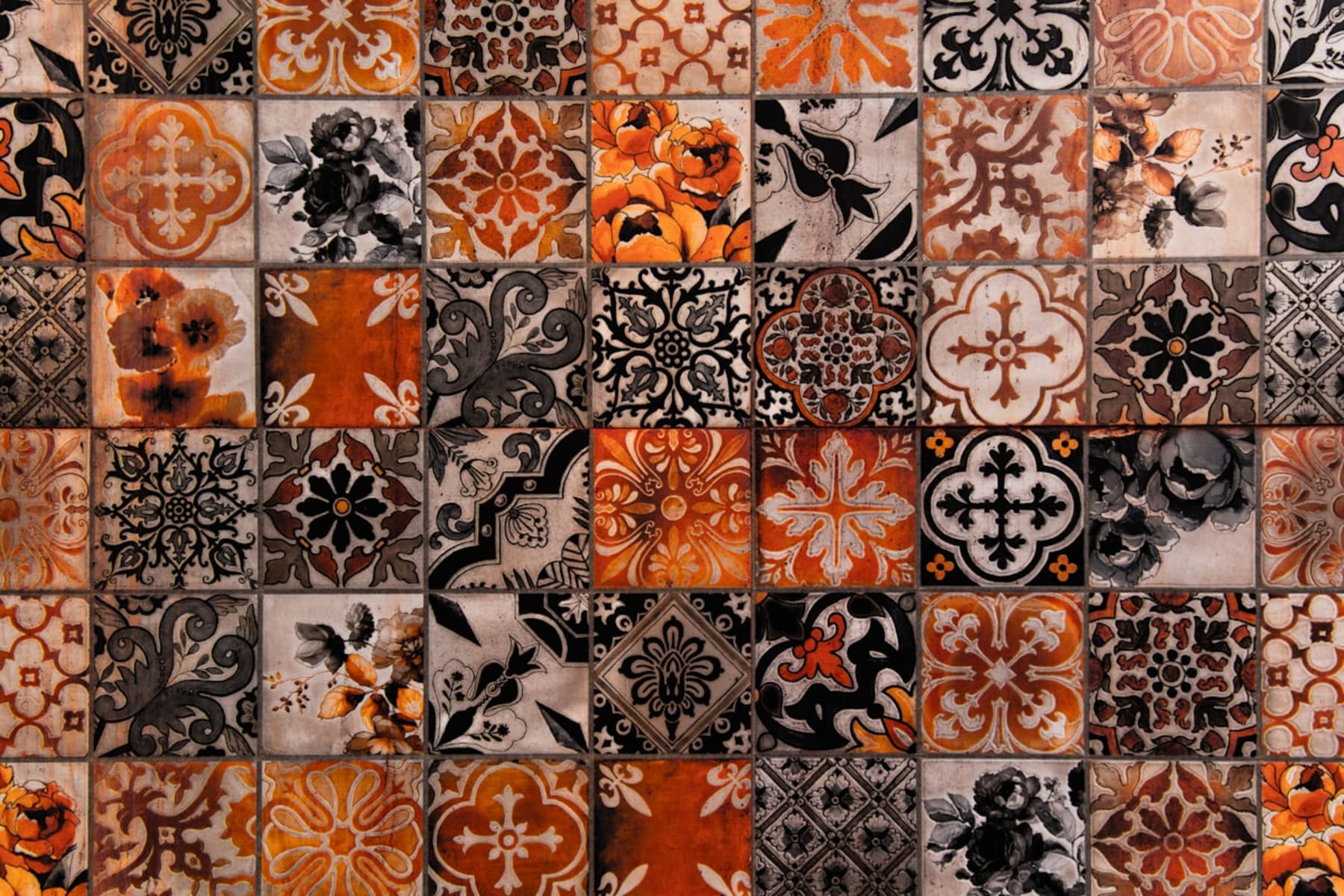
By half past ten the carts have gone, every shutter is up, and the volume changes. This is when the bazaar begins telling you that you are a friend and asking where you are from, and it is when we leave. We take the Mahmutpaşa slope down towards Eminönü, which is the same trade without a ceiling — hardware, wedding dresses, buttons, sacks of pistachios — and end up at Rüstem Paşa mosque, which is small, blue, reached by an unmarked staircase between two shops, and almost always empty. We have never bought anything on that street. We go because after three hours of looking at objects it is useful to stand still and look at a room. It has 66 tile panels and almost nobody in it, because the staircase looks like a fire exit and the guidebooks put it four pages after the Blue Mosque.