48 Hours in Kyoto
Two days on foot, from ceramic workshops to a stationer that has sold the same notebook since 1972.
Kyoto rewards people who walk. The city is flat, the blocks are short, and almost everything worth finding sits behind a door with no sign on it. We arrived on a Thursday night on the last Haruka from Kansai, dropped the bags in a room off Karasuma, and started at six the next morning, when the Nishiki traders were still setting up and the ceramic streets to the south were empty. Six is the correct hour. The pickle sellers are hosing down their frontage, the fish is being laid out on ice, and nobody tries to sell you anything because the market does not open for two hours. By eight it is a corridor of tourists and you cannot stop walking without being walked into. We drank coffee standing up at a counter near Takoyakushi, which cost 380 yen and was better than anything we had later at four times the price.
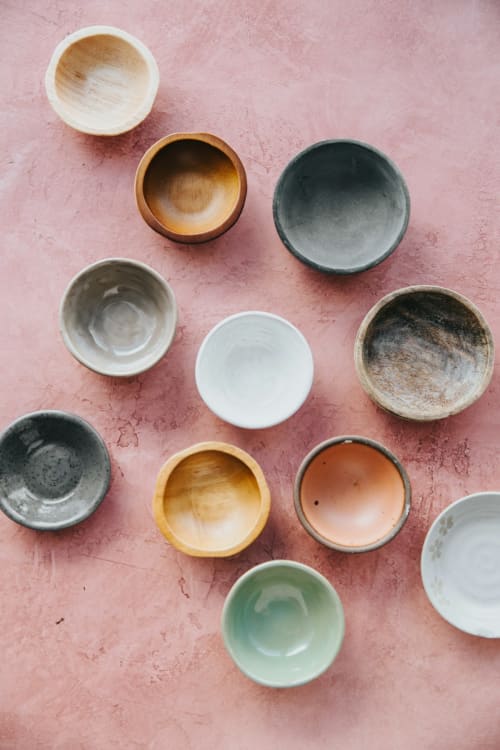
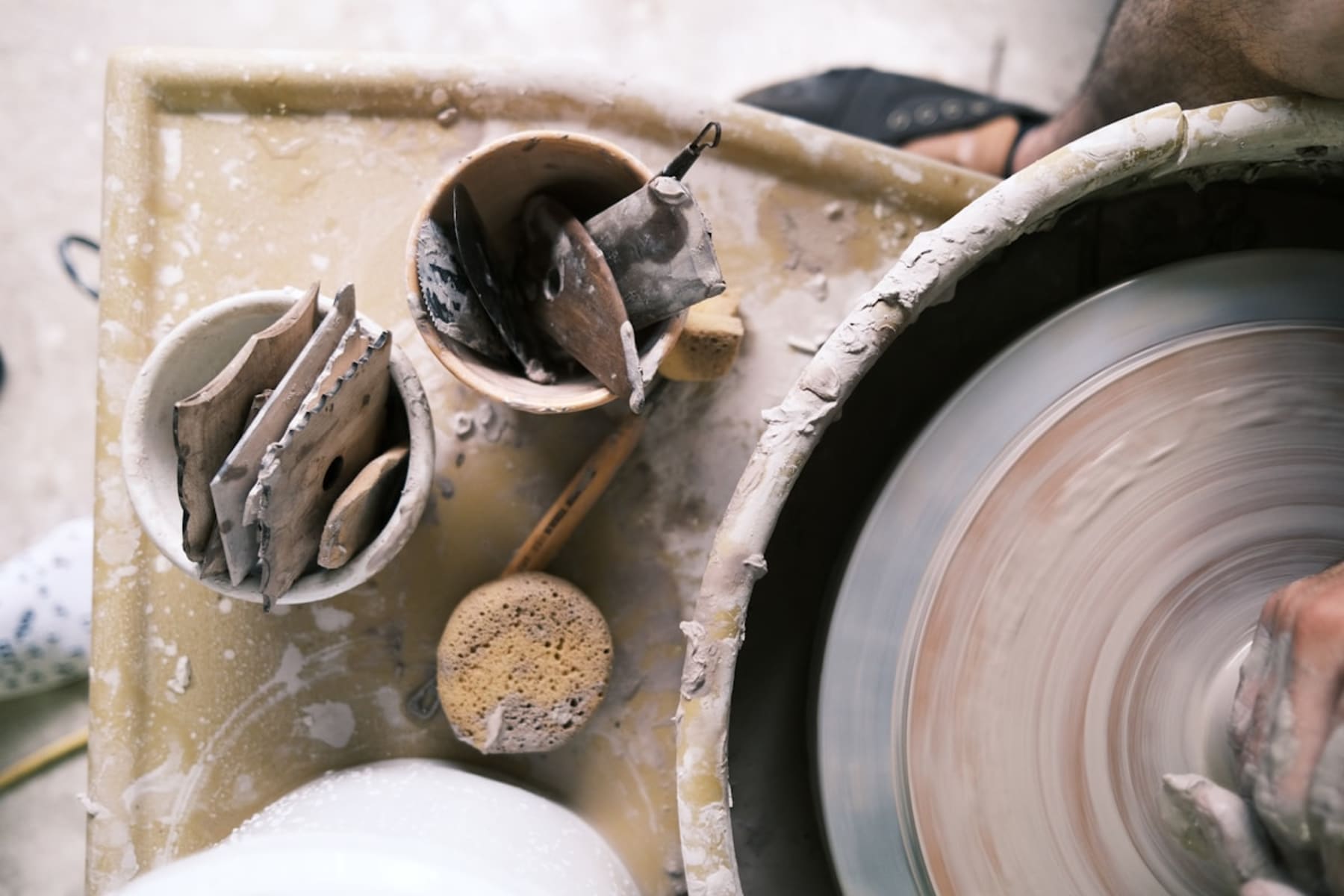
The first workshop we went to was one we had visited two years earlier, in the streets below Kiyomizu where the hill runs down towards Gojo. Three people work there. They make roughly two hundred pieces a month and sell most of them inside Kyoto — to two shops and a tea school — and what leaves the city is whatever is left over. The bowls we brought back are from a batch of twelve glazed in a single firing. The colour is slightly different in each, running from a warm oatmeal at one end of the rack to something closer to grey at the other, and this is not a defect. We asked whether the variation bothered him. He said it bothered his customers for about a week and then stopped bothering them, and that anyone who wanted twelve identical bowls had a shop for that on the main road. He charged 4,200 yen each and would not move on it, which was correct.
The walk between the two ends of a day is the part nobody writes down, and it is where most of what we learn actually happens. From Gojo we went north along the Kamo, which takes forty minutes and costs nothing, past the herons standing in the shallows and the students sitting at their regulation intervals along the bank. Then west into the grid. We looked at a knife shop on Sanjo where a man was putting an edge on a blade with a wet stone and did not glance up once in ten minutes; a broom maker with about nine brooms and no lights on; a shop selling nothing but bamboo baskets, at prices that made us put them down more carefully than we had picked them up. We bought none of it. But we now know what a hand-forged petty knife costs in Kyoto in April, and that is the sort of thing that saves you money for years afterwards.
By midday the heat pushes you indoors, which in Teramachi means stationery. There is a shop in the covered arcade that has sold the same grid notebook since 1972, in the same three sizes, and has never once put it on sale. The paper is a cream 81 gsm from a mill in Ehime and the grid is printed in a grey so pale that you can photograph a page without it showing. The middle size is 480 yen. The woman who runs it is the founder’s daughter, and before she would sell us any quantity she asked what we intended to do with them — not suspiciously, but the way you would ask about a dog you were rehoming. We explained. She thought about it, went into the back, and came out with a carton of forty, which is what we bought. She would not discuss a trade price and we did not push it.
What went wrong went wrong that afternoon. We had an appointment at four with a lacquer studio in Higashiyama, arranged two months earlier by fax through a friend, and we assumed we could get there on a bus. Kyoto buses at four o’clock in April are a joke told at the expense of anyone in a hurry: we sat in traffic on Higashioji for thirty-five minutes watching people on foot overtake us, and arrived at twenty past. He had stayed open. He was polite about it in the way that makes it worse, showed us three pieces in eleven minutes, and had his coat on before we reached the door. We bought nothing and will not be offered anything there again. The lesson is not really about buses. It is that in Kyoto the appointment is the transaction, and we had spent ours before we sat down.
The second day we spent north, in Nishijin, among the textile houses, and came away with nothing at all. The looms are jacquards from the sixties, still driven by punched cards, and the noise inside a working house is loud enough that everything has to be said twice. We were shown obi that take three months and cost more than a car, and then the small things — coasters, card cases, off-cuts made up by the weaver’s wife — at 1,800 yen, which were the only pieces we could plausibly have carried. We did not buy those either, because they are made from the ends of somebody else’s work and we could not have described them honestly on a card. Coming home empty happens far more often than the internet would suggest, and it is not a wasted day. You learn what a thing should cost, and what it should feel like, so that you know it when you finally see it somewhere else.
On the last evening we went back to the workshop to collect the bowls. They were packed in newspaper — a Thursday edition of the Kyoto Shimbun, which we have kept — inside a wooden crate the maker had built himself that afternoon, dovetailed at the corners, with our name written on the lid in marker pen. The crate weighed 6.4 kilos with twelve bowls in it. We carried it to Kyoto station between us, changing hands every two hundred metres, and put it on the 20:12 to Tokyo. Each bowl now travels with a passport card recording where it was made and by whom, written out one at a time at a table in Delhi. It is a small ceremony and it adds an hour to every batch. It is also the entire point of the business, and on the days when the arithmetic looks bad it is the thing that settles the argument.